 CopyTrans Studio

Modern iPhones shoot in high-resolution HEIC, ProRAW, and 4K formats, so photo libraries can fill up tens, and sometimes hundreds, of gigabytes faster than most users expect. This problem is only exacerbated by improvements in iPhone cameras and manifests itself in more than just a warning about storage space running low.
Photographers who use iPhones regularly encounter a number of familiar problems: devices slow down under the weight of huge photo libraries, iCloud bills quietly grow every month, backups go unnoticed due to storage limits being exceeded, and there is a real danger of losing everything due to a cracked screen or a damaged update.
Transferring photos from your iPhone to an external hard drive is the most practical and economical solution to all these problems. Unlike backing up photos to iCloud or other cloud storage, saving iPhone photos to an external drive creates a completely reliable physical backup.
- Why move photos from iPhone to external hard drive?
- How to move photos from iPhone to external hard drive?
- CopyTrans Studio vs DCIM folder method
- How to transfer photos from iPhone to flash drive: FAQ
Why move photos from iPhone to external hard drive?
Perhaps you don’t even know why you should do it? So, first of all, I would like to show you the main reasons why it is important to move photos from an iPhone to an external drive. Here are some ideas for you:
- Preserve and Protect Your Memories: an extra backup will make your life easier. We never know when our iPhone may crash, iCloud photos may get deleted, or our PC hard drive may die. But when you have a backup on an external drive, you can sleep peacefully.
- Free Up Storage Space on Your iPhone: iPhone is out of space. Does it sound familiar? Photos always take a lot of storage, so when you back up photos to an external drive, you can then delete them from the iPhone and make room for new great photos!
- Organize Your Photo Library: let me guess! You have thousands of photos in your Photo Library, and it is quite a challenge to find something there. Transferring iPhone photos to an external hard drive gives an opportunity to organize your photos in a more structured way. By creating folders, albums, or categories on your external hard drive, you can easily access and manage your photos, making it easier to find and share specific images when necessary.
- Enhance Security and Privacy: to protect sensitive or personal photos, store them on external storage rather than on your iPhone or iCloud. The external hard drive gives more privacy and is more difficult to hack.
- No update issues: your iPhone, iCloud and PC are constantly updating, so when you have photos on an external hard drive, you can be sure that no image will be lost because of an unexpected bug!
How to move photos from iPhone to external hard drive?
We now know it is worth copying the photo library to an external drive. So let’s see how to transfer photos from iPhone to external drive using PC in a few clicks ! The best solution is CopyTrans Studio :
- Download and install CopyTrans Studio on your PC. Download CopyTrans Studio
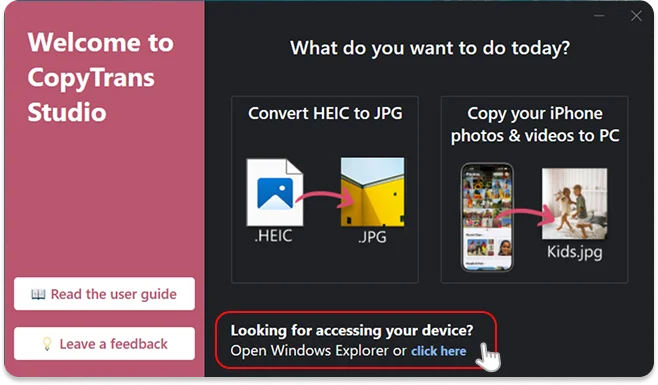
- Click on the CopyTrans Studio icon. Open the program.
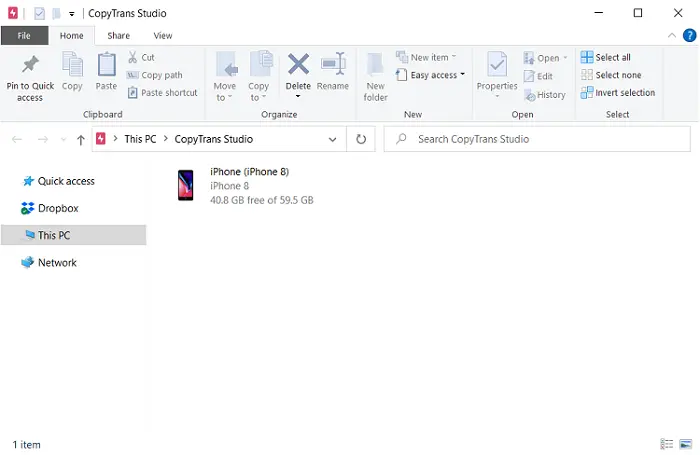
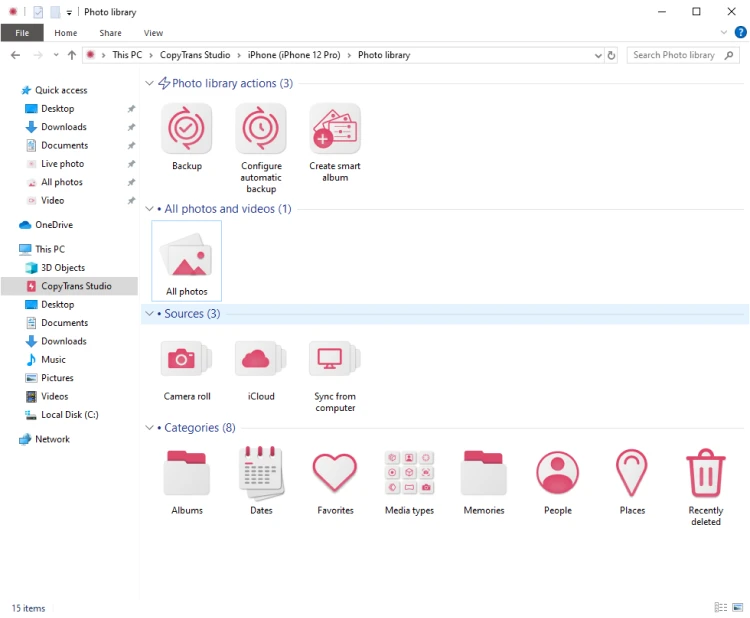
- Now select your iPhone and then “Photo Library”.
- You can select photos from the “All photos” folder, albums or categories.
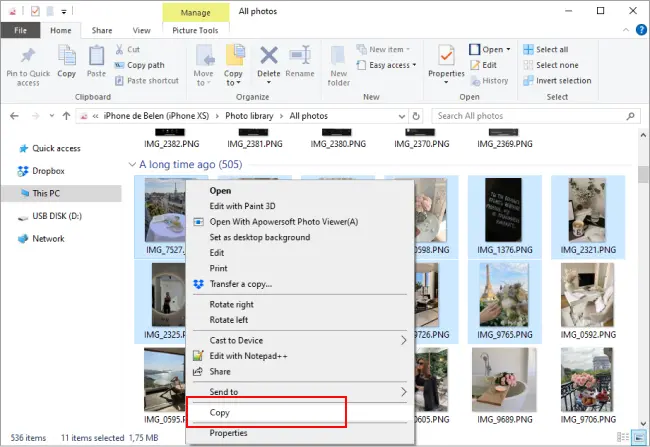
- You can then copy the photos.
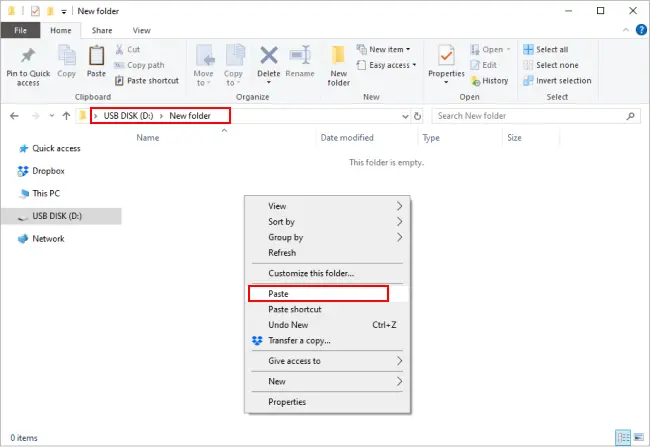
- Now open your hard drive and choose a folder. Paste the copied photos or simply drag and drop them.
CopyTrans Studio vs DCIM
Although you can technically transfer photos by connecting your iPhone to your PC and browsing internal folders, this process is rarely straightforward. Apple’s standard DCIM structure is designed for the device operating system rather than for user convenience, often resulting in a “confusing maze” of folders with obscure names and misplaced files.
To help you decide which method is right for you, here’s a quick comparison of CopyTrans Studio with the traditional manual transfer method:
How to transfer photos from iPhone to flash drive
FAQ
How can I transfer photos from my iPhone to an external hard drive?
To transfer photos from your iPhone to an external hard drive, you can connect your iPhone to the PC using a USB cable. Then, you manually copy the photos you want from your iPhone to the external hard drive via CopyTrans Studio. It’s also possible to back up the whole Photo Library in 2 clicks.
Can I transfer photos from my iPhone to an external hard drive without a computer?
Unfortunately, it’s impossible to transfer photos directly from your iPhone to an external hard drive without a computer.
How do I import photos from my iPhone to an external hard drive on a Mac?
To transfer photos from your iPhone to an external hard drive using Mac, you can use the Photos app or Image Capture utility to select the photos and then save them to the external hard drive connected to your Mac.
Can I transfer both photos and videos from my iPhone to an external hard drive?
Absolutely! You can transfer both photos and videos from your iPhone to an external hard drive using the same method. Connect your iPhone to the PC, open the folder on the external hard drive, drag and drop files from the iPhone to the external hard drive via CopyTrans Studio.
Final Thoughts
Backing up your iPhone photos to an external hard drive doesn’t have to be a headache. Once you know the right method, transferring your memories will be quick, easy, and stress-free. No more digging through confusing DCIM folders, dealing with duplicates, or fear of losing precious photos. In just a few clicks, your entire photo library will be securely stored, organized and ready to view at any time without taking up space on your iPhone.
So go ahead, take control of your memories and provide them a safe home on your external drive. After all, your photos deserve more than a crowded phone – they deserve to be saved.