 CopyTrans Studio


Are you a Windows user struggling to open MOV files? You’re not alone. Many people encounter frustrating compatibility issues when trying to play MOV videos, especially those recorded on iPhones or other Apple devices. This article is designed specifically for Windows users who want to learn how to open MOV files on Windows, understand why some files won’t play, and discover the best solutions for seamless playback.

MOV files are a popular video format, but Windows doesn’t always support them out of the box. This can lead to error messages like “A new codec is required to play this item” or “HEVC Video extension required.” These issues are common and can be a major source of frustration, especially if you’re trying to view important memories or work-related videos.
In this comprehensive guide, we’ll explain why MOV files sometimes won’t open on Windows, who is affected, and—most importantly—how to open MOV files on Windows 10 and 11 without losing quality or wasting time on unnecessary conversions. Whether you’re dealing with videos from your iPhone, Live Photos, or other Apple devices, this article will help you overcome compatibility problems and enjoy your videos hassle-free.
In this article, we will cover:
What is MOV?
MOV is a file container (like .mp4, .avi, or .wmv) released by Apple in 1998 to facilitate multimedia transfers between different devices and operating systems. MOV files are videos saved in the QuickTime File Format, primarily designed for Apple QuickTime but also compatible with Windows and various streaming platforms.
As a container, MOV can store multiple types of media tracks, including video, audio, subtitles, text, and even 3D models. This versatility makes MOV popular for video editing and post-production. MOV files generally use MPEG-4 encoding to reduce file size without affecting quality.
Their compatibility across platforms and operating systems makes them suitable for editing and streaming video clips. Their versatility is similar to other formats like WMV, which also serve as containers for different media types.
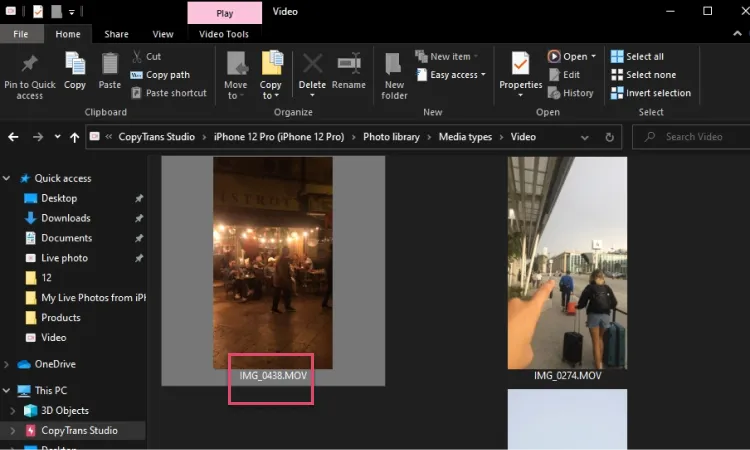
When you transfer your iPhone video file to your Windows PC, you see a .MOV extension next to the file name.
HEVC is not a file format but a video codec. In fact, a video file contains both an audio and a video codec. They reduce the file size and facilitate file storage and transfer.
So, when an iPhone makes a video, it uses codecs to compress the file right away. That is why it doesn’t take ages to send your iPhone photos to a PC. However, Windows needs to have the same codecs to decompress and display the iPhone file.
Why can’t I open .mov file on Windows?
By default, Windows doesn’t natively support .mov files. Well, not all of them. You can still open some .mov files on Windows 10 and 11, but it depends on your original iPhone camera settings.
If you go through your iPhone gallery on a Windows computer, you can see that old .mov files can be easily opened in native Windows viewers. For example, Windows can read .mov videos from an iPhone 8, but not from an iPhone 15. Why so?
The reason is a different video encoding used by modern devices. HEVC (also called H.265) is a modern video compression standard that appeared in 2017 with iOS 11. The previous one, AVC or H.264, was automatically supported by Windows, which is not the case for its successor.
So, older devices still record in H.264 format. Newer iPhones can use both the H.264 and H.265/HEVC formats.
Compatibility of your iPhone videos with Windows depends on the “Format” selected in your iPhone Camera settings (Settings > Camera > Formats).
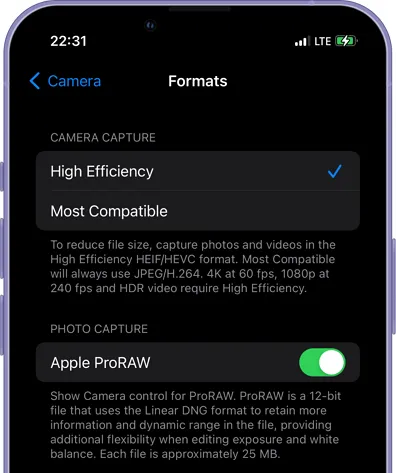
- Your device records videos in the modern H.265/HEVC format if the “High Efficiency” option is on. It also makes photos in HEIC format (which is not compatible with Windows).
- To make your photos and videos compatible with Windows 10 and 11, select the “Most Compatible” setting. In this case, your JPEG photos and H.264-encoded videos will be compatible with native Windows viewers.
If you want to open MOV files recorded on newer iPhones, you may need to install the HEVC Video Extensions from the Microsoft Store to ensure proper playback on Windows. Note that Photos or Files apps on iPhone and iPad can view MOV files directly, as MOV is the native format for these devices.
If a MOV file does not play correctly or fails to start, it may be corrupted.
What to do with HEVC-encoded videos on Windows now that you’ve changed your Camera settings and can make Windows-compatible videos and photos? What to do with the other files that already use the H.265 encoding?
How to play .mov files on Windows 11
You can, of course, look for converters that transform .mov to Windows-compatible formats like mp4. In many cases, you may need to convert mov files to reduce their size, making them easier to share or upload. Common reasons for converting MOV files include:
- Storage limitations
- Email restrictions
- Compatibility with certain devices or platforms
No matter the reason, reducing MOV file size can be an important matter. However, conversion often involves loss of quality and can be quite time-consuming, as you have to manually upload and download the files.
Some of the online tutorials suggest trying other Windows native apps: Windows Photo Viewer, Windows Player, and Windows Media Player (yes, these two are different programs). We made a test – they don’t work ☹️ Windows doesn’t leave you a choice but to install special software to play HEVC-encoded .mov videos. Let’s see what options we have.
Use CopyTrans Viewer (Free solution)
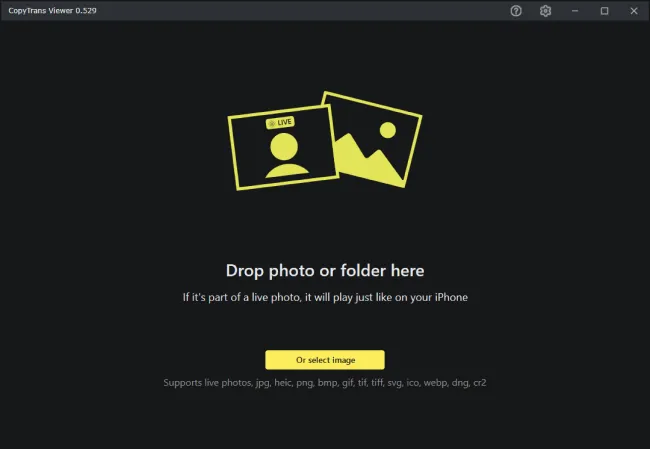
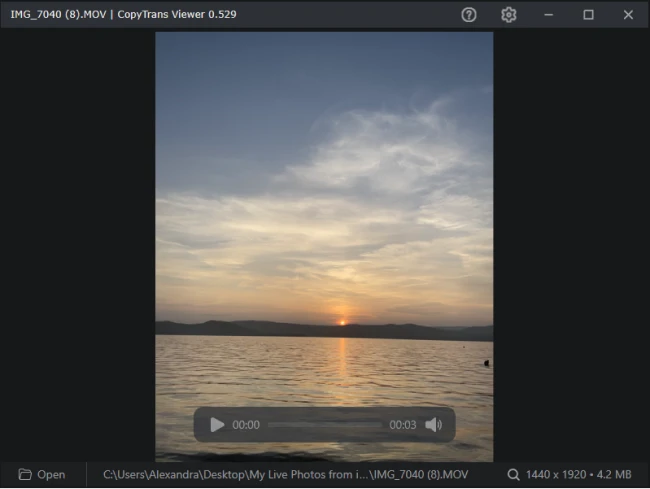
CopyTrans Viewer is a photo and video viewer that supports all Apple tricky formats. CopyTrans Viewer is compatible with HEIF/HEVC images and videos and can display all kinds of .mov videos, as well as .heic photos. It can also show Live Photos in motion. So, it seems to be just perfect for viewing your iPhone content on Windows. Moreover, CopyTrans Viewer is completely free and is bundled with photo editing software that you can try with a free trial—no credit card required.
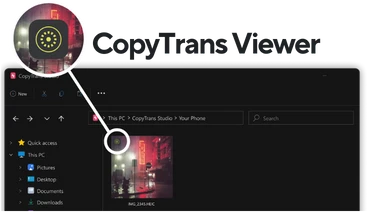
- Play iPhone videos without installing additional codecs
- Open HEIC photos natively on Windows
- View Live Photos in motion
CopyTrans Viewer is bundled with CopyTrans Studio.
- Click on the button below to download and install CopyTrans Viewer. Use this Setup guide if you need help. Download
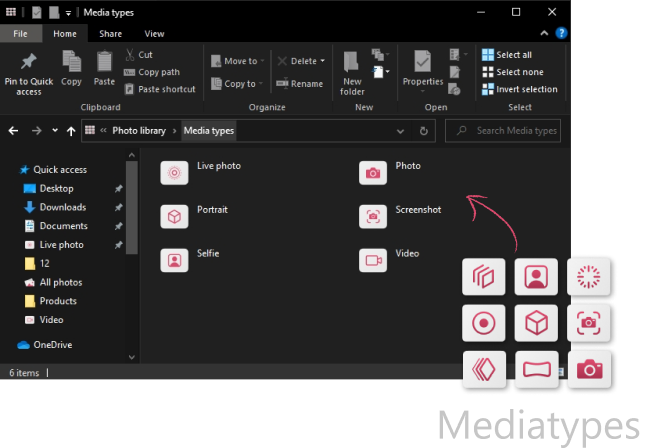
- Open Windows Explorer, click on CopyTrans Studio, and select your device. To quickly access your iPhone videos or Live Photos, select “Media types”.
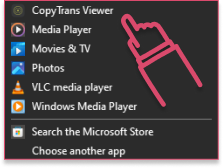
- Drag and drop your .mov video files to your Windows PC or open them right from the Explorer. To do so, you can do a right-click on the file and then select CopyTrans Viewer.
- You can start CopyTrans Viewer by double-clicking on the icon on your desktop as well. Then, simply upload your files or whole iPhone albums to the viewer window.
- To create a playlist, simply upload multiple videos at once. After editing or organizing your videos, you can save your files or playlists for future access.
- Hover your mouse over the image to see your Live Photos move. Use side arrows to switch between your files.
- Free viewer that can display and back up your iPhone photos and videos to a folder or an external hard drive
- Perfect for viewing your iPhone videos and albums seamlessly and fast
- Drop a single video to the CopyTrans Viewer interface and use arrows to navigate through files
- Doesn’t skip files or shut down automatically after your video was played
- Adjust the screen size for a more comfortable experience
Buy a Windows codec
Unfortunately, Windows can’t afford to give a HEVC codec for free anymore. In order to get the plugin, you can follow the link in the Windows popup that appears when you open a .mov. Or you can access Microsoft Store and type “HEVC Video Extensions” in the search bar.
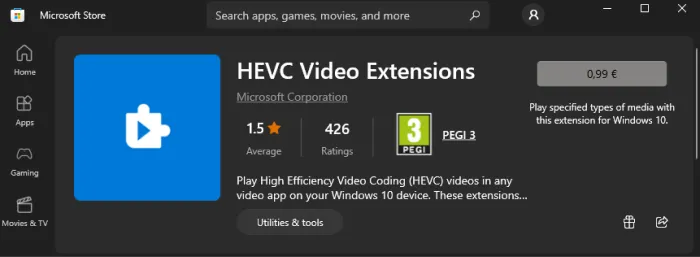
- Its main advantage is that it’s a codec. It means that it gives you built-in support for HEVC-encoded files.
- Windows will invite you to install some additional extensions to open certain files.
- Even if the price looks affordable, this software isn’t free.
Use VLC player
- VLC Media Player is a universal solution that works on nearly every platform, including Windows, Mac, Android, and iOS, making it a versatile choice for users on various devices. Get VLC player on the official VideoLAN website. Make sure to download software only from authorized sources.
- Install VLC player on your PC. Tip: if you don’t want to get additional plugins, uncheck the corresponding boxes in the “Choose components” installation menu.
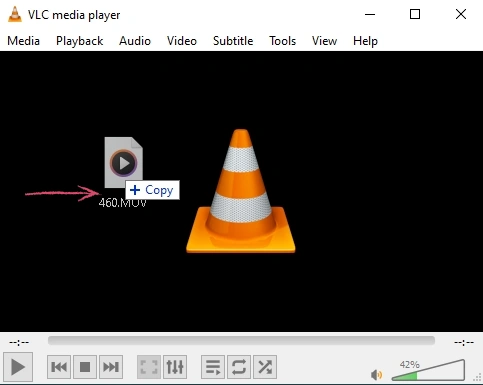
- To open a .MOV file in VLC player, start it with a double click and drag your file to the player zone. VLC supports MOV playback across different platforms, so you can open MOV files not only on Windows but also on Mac, Android, and iOS devices.
- Another option is to right-click on your file > Open with > VLC player.
- It’s a free software program that works for a full-screen display of long videos. It’s definitely a plus for watching movies!
- VLC becomes less convenient if you want to look through files in your video gallery or open a whole folder with photos/videos.
- If you are switching between short .mov videos, VLC doesn’t allow you to adjust the screen size and switches to the next file right after the previous one ends.
MOV player
FAQ
1. Why are some .MOV files not playing on Windows?
Some .MOV files use the HEVC (H.265) video codec, which Windows does not support by default. While Windows can play .MOV video files encoded with H.264, HEVC video files require either a special codec or a compatible video player. On modern Windows versions, you can open MOV files natively using the Movies & TV app or Windows Media Player, and third-party options like VLC Media Player also support MOV playback.
2. What is HEVC and why does Windows need a codec for it?
HEVC (High-Efficiency Video Coding) is a modern video compression standard used by iPhones to reduce file size while maintaining high quality, helping conserve storage space on your device or hard drive. Windows does not support HEVC by default, so an additional codec or compatible viewer is required to decode and play such videos.
3. Why does Windows request a codec for one .MOV file but not for another from the same iPhone?
Because iPhones don’t always record videos with the same settings. Even on the same device, Live Photos, 4K videos, slow-motion clips, or videos recorded after a system update may use HEVC, while others remain in H.264 format. Windows checks the codec inside each file, not the file extension, so the system’s behavior seems inconsistent.
4. Does the video format change when transferring from iPhone to Windows?
No. Copying or transferring a video does not change the file itself. If a .MOV video was recorded in HEVC format on your iPhone, it will remain in HEVC format on your PC. Playback issues arise because Windows cannot decode this codec, not because the transfer process damaged or altered the file.
5. Why do Live Photos cause more playback problems in Windows than regular videos?
Live Photos combine a still image with a short HEVC video clip. Even if regular videos open fine in Windows, the embedded HEVC video in Live Photos often causes codec errors. That’s why Live Photos cannot be played on Windows unless you use a viewer that supports Apple formats.
6. Is it safe to install the Windows HEVC codec, and does it affect other video files?
Yes, it is safe, but also very limited. The codec decodes HEVC for Windows. That way, the codec teaches applications that use the system player to play HEVC. However, it does not enhance the ability to view iPhone media file thumbnails, Live Photos, or photos on Windows. Therefore, many users prefer to use special viewing programs rather than changing the system codecs.
7. How can I edit MOV files and what features are available?
You can use a video editor to import, edit, and save MOV files. Editing MOV files allows you to trim, add transitions between scenes, insert sound effects, and remove unwanted segments, giving you flexibility in how your final video is presented. Many video editors also support recording new video or audio, and let you export or save your edited MOV files efficiently, which is essential for managing storage space. Popular editors support a wide range of codecs and features for customizing your videos.
8. What software can open MOV files on Mac and Windows?
MOV files can be opened natively on Mac using QuickTime Player, which is the essential built-in player for this format. On Windows, you can use the Movies & TV app or Windows Media Player on modern versions, as well as third-party applications like VLC Media Player. Several built-in and third-party applications support the MOV format on both Mac and Windows devices, making it easy to open, play, and edit MOV files across platforms.
.mov file
Final Thoughts
If Windows refuses to open some iPhone videos and gives errors about missing HEVC codecs or extensions, don’t worry – it’s a common problem that’s easy to fix.
The problem isn’t the .MOV format itself, but the HEVC codec used in some videos, especially Live Photos and 4K recordings from newer iPhones. While Windows doesn’t support HEVC out of the box, you now know how to play these videos for free – no trial programs or questionable downloads. Whether you install a free video player like VLC or add the right codec extension, you can open all .MOV files with confidence.
And if you’re using CopyTrans Studio to transfer videos from your iPhone, you’re already ahead of the game – just follow the tips in this guide to make sure nothing interferes with playback.